

Get A Free Consultation
(406) 315-3737 Get A Free Consultation
(406) 315-3737
When people call our office after a serious crash with a commercial truck, one of the first questions is simple: What is the average settlement?
The honest answer is that there is no reliable average.
Truck accident cases are not interchangeable. The value of a claim depends on the strength of the evidence, the seriousness of the injuries, how many companies share responsibility, and whether critical trucking data is preserved before it disappears. In Montana, these cases often involve violations of the Federal Motor Carrier Safety Regulations (FMCSRs), layered insurance policies, and corporate defendants with significant resources. Outcomes turn on preparation and proof—not on a statewide “average.”
A fully loaded tractor-trailer can weigh 20 to 30 times more than a passenger vehicle. When that force is involved in a highway collision—imagine a red semi colliding with a silver car, both vehicles crushed and severely damaged—the injuries are often life-changing.
Some clients recover within months. Others face multiple surgeries, spinal injuries, traumatic brain injuries, or permanent physical limitations. These are not minor cases—they are often serious personal injury claims in Montana, where long-term medical care and future earning capacity must be carefully evaluated.
Damages develop over time as treatment progresses and doctors determine long-term prognosis.
Liability is also rarely limited to just the driver. The motor carrier may be responsible for hiring and supervision. A broker may have negligently selected an unsafe carrier. A shipper may have improperly loaded cargo. A maintenance contractor may have skipped critical brake service. In some cases, a manufacturer may share fault.
Each responsible party may carry separate insurance coverage. That alone makes any “average” figure meaningless. What matters is the specific evidence and the total available coverage in your case.
Settlement value generally depends on two broad categories: liability and damages.
On the liability side, strong, objective evidence makes a difference. Commercial trucks generate electronic data. Engine control modules record speed and braking in the seconds before impact. Electronic logging devices track hours of service and rest periods under federal hours-of-service regulations. Onboard cameras may capture the crash sequence. Dispatch records can reveal unrealistic delivery schedules.
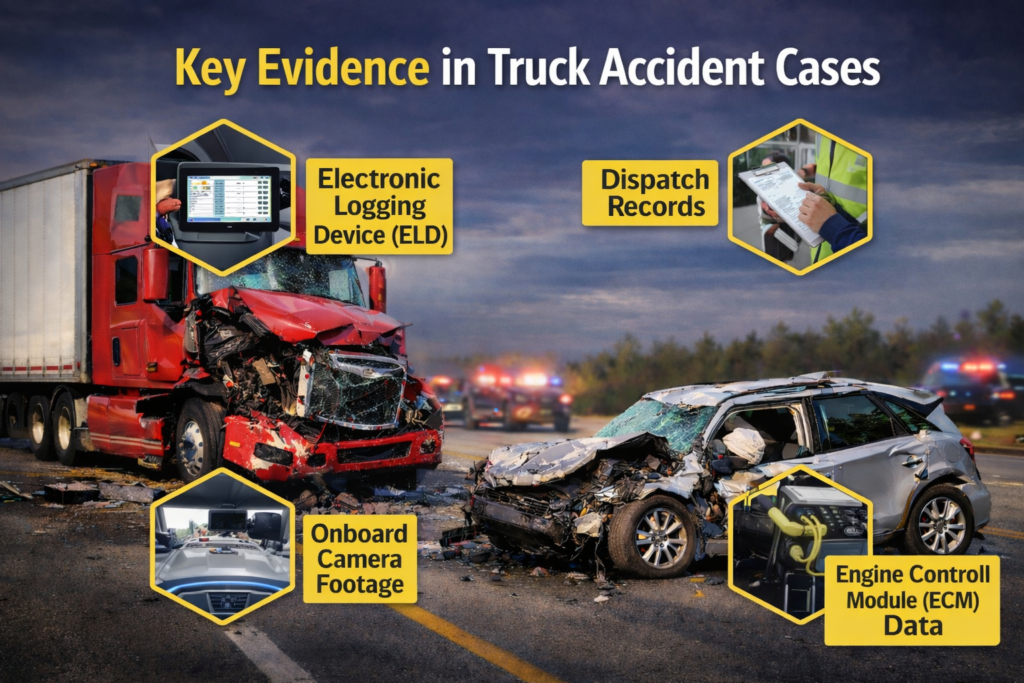
When that information is preserved early, disputes narrow. When it is lost or overwritten, insurers gain leverage.
On the damages side, documentation is critical. Economic losses include medical care, surgeries, rehabilitation, medication, and lost income. If injuries affect long-term work capacity, future earning losses must be supported by vocational and economic analysis. If ongoing treatment is likely, a life-care plan may be necessary to project future medical costs.
Non-economic damages reflect pain, emotional distress, and the disruption to daily life. These are real losses, but they must be supported by consistent medical records and credible testimony.
In rare cases involving egregious safety violations—such as falsified hours-of-service logs or knowingly unsafe equipment—punitive damages may become part of the evaluation under Montana punitive damages law. While not guaranteed, the possibility alone can affect how insurers approach negotiations.
Insurance companies look for weaknesses. Gaps in treatment allow arguments that symptoms improved or were unrelated. Early recorded statements can be used later to challenge credibility. Comparative fault allegations—such as sudden stopping or blind-spot positioning—can reduce compensation if not effectively countered.
Most of these issues are preventable with early investigation and careful documentation.
Montana applies a modified comparative fault rule under Montana’s comparative negligence statute. Compensation is reduced by the percentage of fault assigned to the injured person, and recovery is barred if fault reaches the statutory threshold.
That makes objective evidence especially important. ECM data, video footage, and reconstruction analysis often clarify timing, braking distance, and visibility. The stronger the proof, the harder it is to shift blame.
Truck accident claims are also governed by Montana’s statute of limitations for personal injury claims, which limits the time available to file suit. Waiting too long can permanently bar recovery.
Early stages focus on preserving evidence and stabilizing medical care. Once liability is documented and treatment reaches a clearer trajectory, a comprehensive demand can be presented.
If the defense cooperates, resolution may follow. If key documents are withheld or responsibility is denied, litigation may be necessary. Cases involving multiple corporate defendants and expert testimony naturally take longer. However, thorough preparation often leads to meaningful settlement discussions before trial.
Seek medical care and follow treatment recommendations. Keep records of appointments, prescriptions, and missed work. Avoid discussing the crash on social media. Before giving a recorded statement or signing broad medical authorizations, speak with counsel.
Early decisions often shape the long-term value of a claim.
Truck accident litigation is different from ordinary car accident cases. Federal safety regulations, electronic data systems, layered insurance coverage, and corporate defense strategies require focused experience.
At Boland Aarab PLLP, our Montana attorneys handle serious trucking collisions with a trial-ready approach from day one. That means moving quickly to preserve evidence, working with qualified experts when necessary, and building a fully documented damages model before entering negotiations.
If you or a loved one has been injured in a commercial truck crash in Montana, you do not need to guess at an “average” settlement. You need a careful evaluation of your specific case.
We are available to discuss your situation confidentially and explain the next steps. Call Boland Aarab PLLP at 406-315-3737 to schedule a consultation.
Correct. There is no meaningful “average.” Commercial truck cases vary widely based on injury severity, available insurance coverage, federal regulatory violations, and the strength of preserved electronic evidence. Two crashes may look similar but produce very different outcomes depending on proof and long-term damages.
Federal law requires interstate motor carriers to carry minimum liability coverage under the federal minimum liability insurance requirements for motor carriers. Many carriers maintain $750,000 to $1 million in primary coverage, often supplemented by umbrella or excess policies. If multiple companies share responsibility—such as a broker or shipper—additional policies may apply. Identifying all available coverage early is critical.
Montana follows a modified comparative negligence rule under Montana’s modified comparative negligence statute (Mont. Code Ann. § 27-1-702). Your compensation can be reduced by your percentage of fault, and recovery is barred if your fault reaches 51% or more. That makes objective evidence—such as ECM data, video footage, and reconstruction—especially important to prevent unfair blame shifting.
Most personal injury claims in Montana must be filed within three years under Montana’s statute of limitations for personal injury claims (Mont. Code Ann. § 27-2-201-231). Missing this deadline can permanently bar recovery, so early legal evaluation is important.
Violations of the Federal Motor Carrier Safety Regulations (FMCSRs) can significantly strengthen a claim. For example, drivers must comply with federal hours-of-service regulations, which limit driving time and require rest periods. Proven safety violations often shift negotiations because they demonstrate preventable risk, not just driver error.
Yes, if future treatment is reasonably certain and supported by medical evidence. In serious cases, a life-care planner may outline projected future care needs, and economic experts may calculate long-term costs. Without expert support, insurers often argue that future damages are speculative.
Most cases resolve before trial. However, settlement value often improves when the legal team prepares the case as if it will be tried to a jury. Carriers and insurers evaluate risk differently when they know the plaintiff’s counsel has the resources and experience to proceed through litigation.
In limited circumstances, yes. Under the Montana punitive damages statute (Mont. Code Ann. § 27-1-221), punitive damages may be available when a defendant’s conduct involves actual fraud or actual malice. These damages are not awarded in every case, but egregious safety violations can significantly change how insurers evaluate exposure.
Avoid giving recorded statements without legal guidance. Do not post about the crash or your injuries on social media. Follow medical advice consistently. Gaps in treatment or inconsistent reporting can reduce claim value.
As soon as possible. Critical evidence—such as electronic logging data, onboard video, and maintenance records—can be lost or overwritten if not preserved quickly. Early involvement allows for formal preservation demands and a thorough investigation before the defense shapes the narrative.
Disclaimer: This article is for informational purposes only and does not constitute legal advice. Reading this content does not create an attorney-client relationship with Boland Aarab PLLP. Every truck accident case is fact-specific, and outcomes depend on the unique circumstances involved. If you have been injured in a collision, you should speak directly with an attorney about your situation.