

Get A Free Consultation
(406) 315-3737 Get A Free Consultation
(406) 315-3737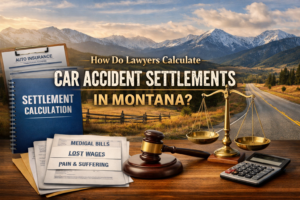
Quick Answer: In Montana, car accident lawyers calculate settlement value by identifying every provable loss caused by the crash—medical costs, lost income, and future financial harm—then adding non-economic damages such as pain, emotional distress, and loss of enjoyment of life. Those numbers are evaluated against Montana’s comparative fault rules, available insurance coverage, and how similar cases have been treated by Montana juries.
There is no formula or calculator that determines what a Montana car accident case is worth. Value is built through evidence, credibility, and experience handling claims in Montana courts.
What Does “Car Accident Settlement Value” Mean Under Montana Law?
A settlement is a negotiated resolution of your injury claim. Its value reflects what the insurer is willing to pay—and what you are willing to accept—based on:
Montana follows a 51% comparative fault rule (Montana Code Annotated Section 27-1-702). If you are found more than 50% at fault, you recover nothing. If you are 50% or less at fault, your compensation is reduced by your percentage of fault. That makes liability analysis especially important in Montana cases.
There is no “average” settlement that applies across the board. Two crashes with similar injuries can resolve very differently depending on fault, medical proof, and how well the case is prepared for trial.
Key Factors That Drive Car Accident Settlement Value in Montana
When a Montana car accident lawyer evaluates a claim, the analysis usually centers on four core areas:
1. Liability (Who Was at Fault)
Clear fault—such as a rear-end collision or a driver cited for DUI—often increases settlement value. Disputed fault lowers it, especially where insurers argue shared responsibility.
2. Injury Severity and Permanence
Objective findings (imaging, surgical recommendations, specialist opinions) generally carry more weight than complaints alone. Permanent injuries, chronic pain, and lasting limitations significantly affect value.
3. Damages
This includes both economic losses (medical bills, lost income) and non-economic harm (pain, suffering, loss of enjoyment of life).
4. Insurance Coverage
Montana has relatively low minimum liability limits. When damages exceed policy limits, experienced counsel looks for additional coverage, including:
How Lawyers Build the Evidence That Supports Settlement Value
Strong settlements are built on organized, consistent proof. A Montana injury lawyer focuses on answering three questions:
Evidence often includes:
The goal is to clearly connect the crash to every loss being claimed.
Medical Expenses: Past and Future
Past Medical Costs
These include emergency care, hospital bills, imaging, therapy, prescriptions, and medical equipment. They are supported by actual bills and records.
Future Medical Care
In cases involving spine injuries, head injuries, or chronic pain, future care is often the largest area of dispute. Montana lawyers may rely on:
Future medical damages must be supported by competent medical testimony. Speculation is not enough.
Lost Wages and Reduced Earning Capacity
Lost Wages
This includes income lost while recovering or attending treatment. Proof may include:
Reduced Earning Capacity
If the crash limits your ability to work in the future, by forcing reduced hours, lighter duties, or a career change, those losses can be claimed even if you return to work.
Montana juries are often receptive to clear, practical explanations of how injuries affect real-world earning ability.
Pain, Suffering, and Life Impact
Non-economic damages cover more than pain alone. They include:
There is no set formula under Montana law. Insurance companies may try to use multipliers, but trial-focused firms rely on evidence showing how the injury actually changed the client’s life—because that is what juries evaluate.
Policy Limits and Comparative Fault
Even strong cases are constrained by two realities:
Insurance Limits
If the at-fault driver carries minimum coverage, recovery may be limited unless other coverage applies. Identifying all available policies early is critical.
Comparative Fault
Any percentage of fault assigned to you reduces your recovery. Insurers routinely argue shared fault to reduce exposure. Effective advocacy focuses on minimizing fault allocation through evidence and accident reconstruction where needed.
What You Can Do to Protect the Value of Your Claim
Your actions matter. To protect your case value:
Once a release is signed, additional compensation is usually barred, even if symptoms worsen.
When Should You Talk to a Montana Car Accident Lawyer?
As early as possible. Early involvement allows counsel to:
You do not need all records in hand. An early consultation is about understanding your rights, risks, and realistic case value under Montana law.
Talk With a Montana Car Accident Lawyer About Your Case
You should not have to guess what your case is worth or feel pressured into a low settlement. A Montana trial-ready firm can evaluate liability, damages, and coverage, then build a claim that reflects the real cost of your injuries.
If you have questions about your options after a crash in Montana, speak with an attorney who regularly handles serious injury cases in Montana courts and prepares every case as if it may be tried.
Please Note:
This article is meant to provide general information and help you better understand how car accident claims work in Montana. It is not legal advice and does not take the place of speaking directly with a lawyer. Every accident and injury is different, and the value of a claim depends on the specific facts of your situation. Reading this page does not create an attorney-client relationship. If you have questions about your own case, a Montana car accident lawyer can review your situation and explain your options.