

Get A Free Consultation
(406) 315-3737 Get A Free Consultation
(406) 315-3737On February 27, 2026, the Montana Supreme Court issued an important decision about the public’s ability to place measures on the ballot. In Kendrick v. Knudsen, 2026 MT 39, the Court ruled that the Montana Attorney General improperly rejected a proposed constitutional amendment aimed at strengthening the state’s ballot initiative process.
Readers can review the full decision here:
https://law.justia.com/cases/montana/supreme-court/2026/op-25-0858.html
The decision reinforces a core principle of Montana’s government: citizens have the power to propose laws and constitutional amendments directly to voters.
For attorneys and advocates who regularly work with Montana election law, decisions like Kendrick v. Knudsen are especially significant. At Boland Aarab PLLP, we closely follow developments in Montana constitutional law, ballot initiatives, and election litigation because these cases shape how citizens and organizations engage in the democratic process.
Montana’s Constitution allows citizens to propose new laws or constitutional amendments through the initiative and referendum process.
You can learn more about Montana’s initiative process from the Montana Secretary of State here:
Proposed 2026 Ballot Issues – Official Montana Secretary of State Website – Christi Jacobsen
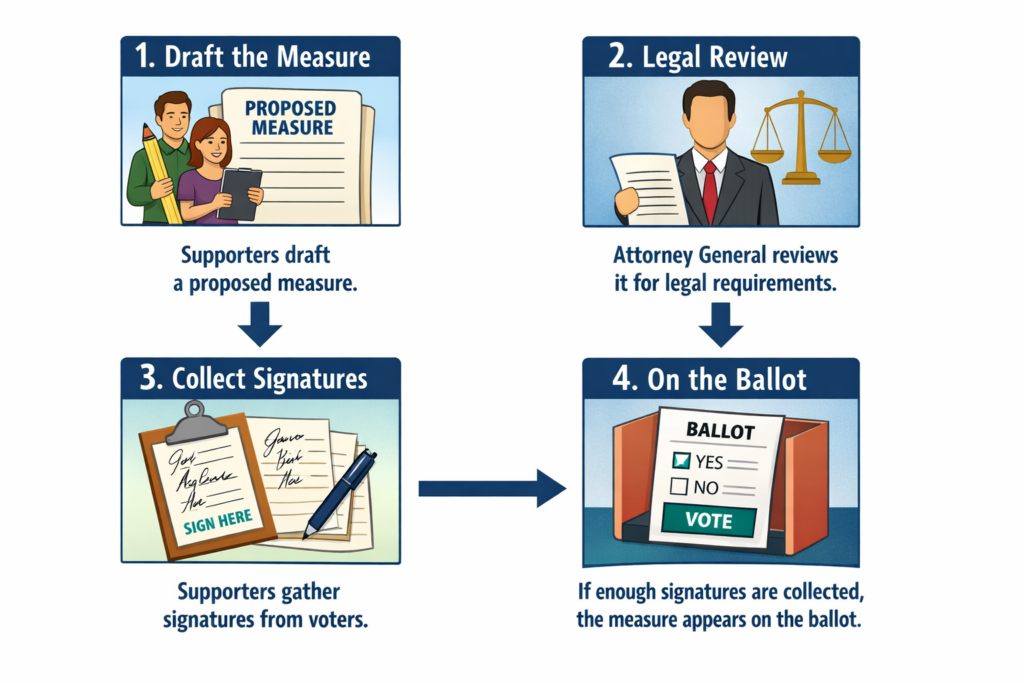
In simple terms, the process works like this:
The case in Kendrick v. Knudsen focused on step two—when the Attorney General reviews the proposal for legal sufficiency.
The proposal at the center of the case was called Ballot Issue 8 (BI-8).
The amendment would add a new section to the Montana Constitution recognizing a fundamental right to use the initiative and referendum process. It also proposed several protections meant to make the initiative process clearer and more predictable.
These protections included:
The Attorney General determined the proposal was legally insufficient and refused to allow it to move forward.
The main argument was that the amendment violated the Montana Constitution’s “separate vote rule.”
This rule requires that if more than one constitutional amendment is submitted to voters, each must be presented separately so voters can vote on them individually.
The rule exists to prevent “logrolling,” where unrelated proposals are bundled together to increase the chances that all of them will pass.
The Attorney General argued that BI-8 included several different constitutional changes in one proposal.
Supporters disagreed and asked the Montana Supreme Court to review the decision.
The Montana Supreme Court ruled that the Attorney General’s analysis was incorrect.
The Court held that BI-8 contains only one constitutional amendment, not several unrelated ones.
According to the Court, the proposal’s provisions all serve the same purpose: protecting the public’s right to use the initiative and referendum process.
Because the different parts of the proposal work together to support that single right, the Court concluded they can appear together in one amendment.
The Court therefore reversed the Attorney General’s legal-sufficiency determination and allowed the initiative to continue through the process.
The Attorney General had also attached a fiscal statement suggesting the proposal could create costs for the state.
However, the official fiscal note prepared by the state showed no measurable fiscal impact.
The Court ruled that speculation about possible future lawsuits does not count as a fiscal impact under Montana law. Because the fiscal note showed no actual impact, the Attorney General did not have authority to add a fiscal statement.
The Court ordered that statement removed.
The decision in Kendrick v. Knudsen has important implications for election law and the ballot initiative process in Montana.
The Court has addressed similar issues in recent ballot initiative cases, including Transparent Election Initiative v. Knudsen:
https://caselaw.findlaw.com/court/mt-supreme-court/118088432.html
These cases collectively help define how Montana courts review ballot initiatives before they reach voters.
Boland Aarab PLLP also participated in the case by representing several organizations that filed an amicus curiae, or “friend of the court,” brief with the Montana Supreme Court.
The brief explained that in some states, the ballot initiative process has become increasingly difficult because executive branch officials have used administrative authority to delay or block initiatives before voters ever see them. The organizations asked the Court to consider these experiences from other states when evaluating the limits of the Attorney General’s role in reviewing ballot initiatives.
By sharing this broader perspective, the brief aimed to help the Court understand why clear limits on executive interference are important to protect the public’s constitutional right to use the initiative process.
Because the Court overturned the Attorney General’s decision, the initiative can now continue through the process.
The Attorney General must prepare official ballot statements and send them to the Secretary of State. Supporters may then begin collecting signatures to place the measure on a future ballot.
If enough signatures are collected, Montana voters will ultimately decide whether the constitutional amendment should be adopted.
Attorneys at Boland Aarab PLLP regularly monitor developments in constitutional law and election-related litigation, including cases that shape how ballot initiatives move through the legal process in Montana.
The Montana Supreme Court’s decision in Kendrick v. Knudsen reinforces a central feature of Montana’s constitutional system: the people have the right to propose and vote on changes to their government.
By limiting the Attorney General’s ability to block initiatives before voters see them, the Court ensured that Montanans—not state officials—have the final say on proposed constitutional amendments.